


BOOKS
Three books, one country: books by Kris Pannecoucke that follow the Congo River, document Team Europe’s Alliance Verte for nature and sustainable agriculture, and explore livestock farming and food security in Congo.

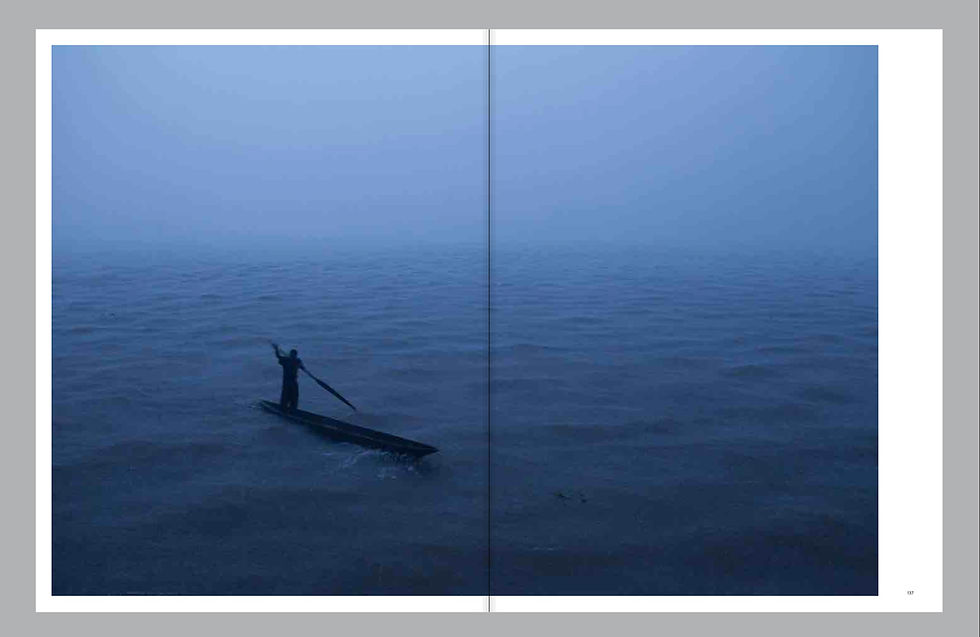

Publication of the photo book 'Fleuve Congo River' in 2017. The book is a journey along one of the world's mightiest rivers. The river was the ideal route to take to portray today's Congo. In a country as big as Europe but without roads the rivers are crucial for the economy, transportation and the survival on a daily bases.
Picha Publishing took care of the layout, text translations, and printing.
In the vast landscapes of Congo, where forests, rivers, and farmland intertwine, a shared ambition has emerged within Team Europe: development in harmony with nature by committing to biodiversity conservation, supporting a transition to a more resilient economy that promotes sustainable agriculture and strengthens food security. 'Working better together' is the conviction that unites the member states behind this initiative. Over the course of almost seven months, I travelled to seven different landscapes, from the mangrove forests of the west coast to Kahuzi-Biega in the east. The result, 'Alliance Verte', a 224-page book in two languages, French and English.
I handled both the photography and the text.


A commissioned corporate book for GNO, a sustainable agricultural company in Congo that breeds livestock with the utmost care for animal welfare and monitors the quality of the grass-fed organic beef. GNO has its own slaughterhouse and butcher's shop, the only ISO certified one in Congo. For this book, I travelled across Congo to explore the situation around livestock farming, food insecurity and illegal Bushmeat hunting. I discovered Kikanda, or vegetarian meat based on orchid tubers, visited the largest farms and saw how families keep small livestock as an alternative to bank accounts. Everything was poured into a bilingual French and English hardcover book with copper letters called 'NYAMA' (meaning 'meat' and 'animal' in Lingala).